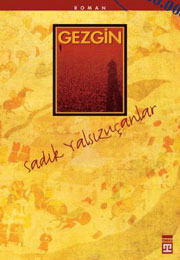
by Sadik Yalsizucanlar.
2004, İstanbul, 256 pages.
The novel is about the spiritual life of the great philosopher, poet, sage Muhammad Ibn 'Arabi, one of the world's great spiritual teachers, who was born into the Moorish culture of Andalusian Spain. The story begins with the encounter of Ibn' Rusd, later known as Averroes, and Ibn' Arabi. During this interesting encounter, the two great philosophers spend an hour together, yet they exchange two words only: 'yes' and 'no'. The novel, written by an initiatic approach to story-telling and fiction, does not contain any dramatic, tragic, or absurd elements. The life of the great Sage, especially the stages of his spiritual/inner life and his visions are told in the book. Ibn' Arabi, who travelled extensively to Mecca, Damascus, Bagdat, Cairo, Algeria, Tunusia, and Anatolian cities such as Konya, Malatya, and Erzurum, had also pursued a spiritual path and gone through an inner transformation during his journeys. Guided by many other sages, Ibn' Arabi later became a great master himself (Shayk al-Akbar), and as a superlative teacher, he guided many others who followed his spiritual path. The extraordinary events he experienced have a significant place in the novel. The stories told in the book reflect a doctrin that the Sage named as the Akbarian tradition. As one of the greatest teachers of spirituality, Arabi's intellectual influence has reached to the present day, and the story of his life, which began in Andalusia and ended in Damascus, is told in Gezgin (The Traveler) in the most beautiful and ingenuous language.

|


